
Who we are
SMES Europa (Mental Health and Social Exclusion, Europe) is an international, non-profit association and European network dedicated to the interface between mental health and social exclusion. It brings together organisations, services, professionals, researchers and people with lived experience concerned with the situation of individuals facing serious mental distress and extreme poverty, including homelessness.
The network seeks to:
- foster integrated, person-centred health and social services capable of responding to complex needs.
- promote the physical, mental and social well-being of people in situations of extreme vulnerability;
- support the recognition and protection of their fundamental rights;
Governance
General Assembly – brings together all members; elects the Board; approves main orientations.
Board – provides strategic leadership; oversees action plans; represents SMES Europa externally.
Secretary General and Coordination Office – manage day-to-day operations, events, projects and communication.
Working groups – focus on specific themes or functions and involve members and experts.
The association operates on a non-profit, member-led and transparent basis.
Board
The Board of SMES Europa brings together experienced professionals from several European countries who are deeply engaged in mental health, homelessness and social inclusion. It is chaired by Luigi Leonori, a psychologist and long-standing promoter of SMES Europa, active in services for people experiencing homelessness and mental distress and in European cooperation. The Board includes social worker Andrew (Andrzej) Czarnocki, director of a Caritas shelter for homeless people in Warsaw, and Irish social worker Tony O’Riordan, Chief Executive Officer of Sophia, with extensive experience in homelessness services and European networking. Among the psychiatrists and psychologists closely associated with the Board and the development of SMES Europa are Dr Preben Brandt, a Danish psychiatrist and founder of Projekt UDENFOR in Copenhagen, co-founder and former Vice-President of SMES Europa, who has devoted more than three decades to working with people who are homeless and severely excluded; Dr Philip Timms, a consultant community psychiatrist in London with South London and Maudsley NHS Foundation Trust, a pioneer of specialist mental health outreach teams for homeless people in the UK and long-standing expert linked to SMES Europa seminars and publications; Dr Victor Soto, a community psychiatrist from Barcelona working with psychiatric services for people who are homeless and involved in SMES Europa projects; Silvia Raimondi, a psychologist and psychotherapist in Rome, founding member of SMES Italia and member of SMES Europa, active in low-threshold and community services for homeless people; Elias Barreto, a clinical psychologist at Centro Hospitalar Psiquiátrico de Lisboa and member of SMES Europa, with long experience working with people in homelessness and internationally published work on trauma, attachment and homelessness and Jacopo Lascialfari, a social professional and project coordinator, director of Coordinamento Toscano Marginalità Foundation in Florence, Board member of SMES Europa and active in coordinating European initiatives such as “Dignity & Well-Being” and “Person First”. Together, the Board and its associated experts provide strategic guidance, ensure that SMES Europa remains rooted in front-line practice and human rights, and represent the network in European and international forums.

Luigi Leonori
President
Luigi Leonori is a psychologist and long-standing President and co-founder of SMES Europa, the European network on mental health, homelessness and extreme social exclusion.
Tony O’Riordan
Vice-President
Tony O’Riordan is an Irish social worker and Chief Executive Officer of Sophia Housing Association, with over 30 years’ experience developing community-based, housing-with-support responses to homelessness in Ireland.
Andrew Czarnocki
Andrew (Andrzej) Czarnocki is a social worker and director of the Caritas Warsaw night and day shelter for homeless people, bringing extensive front-line experience in homelessness and mental health to the SMES Europa Board.
Silvia Raimondi
Silvia Raimondi is a psychologist and psychotherapist in Rome, co-founder of SMES Italia and Board member of SMES Europa, working in community and low-threshold services for people experiencing homelessness and mental distress.
Victor Soto
Victor Soto is a psychiatrist based in Barcelona, working with community and homeless mental health services and serving as a long-standing expert associated with SMES Europa..
Elias Barreto
Elias Barreto is a clinical psychologist in Lisbon, working with psychiatric and homelessness services at institutions such as the Júlio de Matos Psychiatric Hospital r known for his research and publications on attachment, trauma and homelessness.
EKPSE
XXXXX
Jacopo Lascialfari
Jacopo Lascialfari is a social professional director of Coordinamento Toscano Marginalità in Florence, and a SMES Europa Board member involved in European projects on homelessness and mental health.
WHAT WE DO
SMES Europa focuses on people affected by both mental health problems and severe social exclusion, including those living in public spaces, shelters or very unstable housing and those excluded from services due to complex needs or administrative barriers.
Mental health and homelessness – links between mental distress, trauma and homelessness; integrated support
People who experience homelessness are disproportionately affected by mental distress and by the consequences of trauma, including violence, abuse, institutionalisation and forced migration. At the same time, the stress, insecurity and stigma associated with life on the streets or in unstable accommodation can seriously worsen existing mental health problems or trigger new ones. For these reasons, purely clinical or purely social responses are rarely sufficient. SMES Europa promotes integrated support, where mental health care, psychosocial support, housing solutions and practical assistance are coordinated around the person rather than provided in isolation..
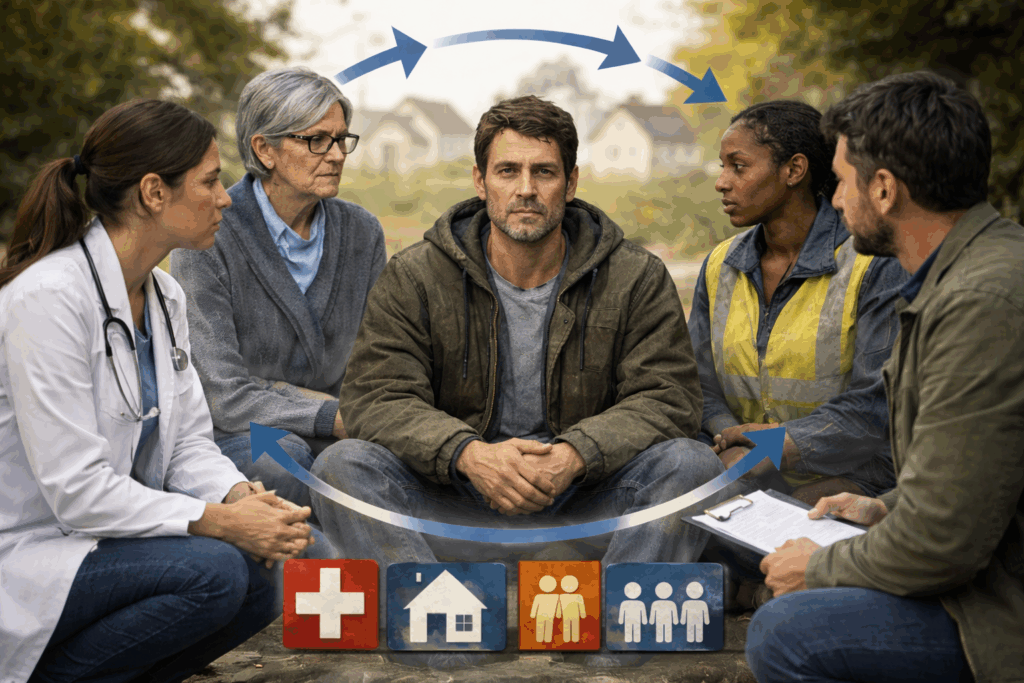
Person-centred and integrated services – cooperation between mental health, homelessness, social services, primary care and communities
For people who face both mental distress and extreme exclusion, fragmented systems can be as harmful as a lack of services. SMES Europa advocates for person-centred and integrated services, in which different actors – mental health services, homelessness services, social services, primary care, housing providers and community organisations – work together around the person. This involves shared assessment and planning, clear pathways between services, and a common commitment to long-term support rather than short, isolated interventions. The goal is to build responses that are coherent from the perspective of the person, and that support real opportunities for recovery, housing and inclusion.
Human rights, dignity and participation – rights-based practice, non-discrimination, participation of people with lived experience
SMES Europa understands mental health and homelessness not only as social or clinical issues, but also as human rights issues. Every person has the right to dignity, safety, health care, housing and participation in community life, without discrimination on the basis of poverty, nationality, diagnosis or legal status. A rights-based approach calls for services and policies that respect autonomy, ensure informed consent and protect people from degrading treatment. It also means recognising people with lived experience as active partners, involving them in designing, delivering and evaluating services and in shaping the network’s priorities.
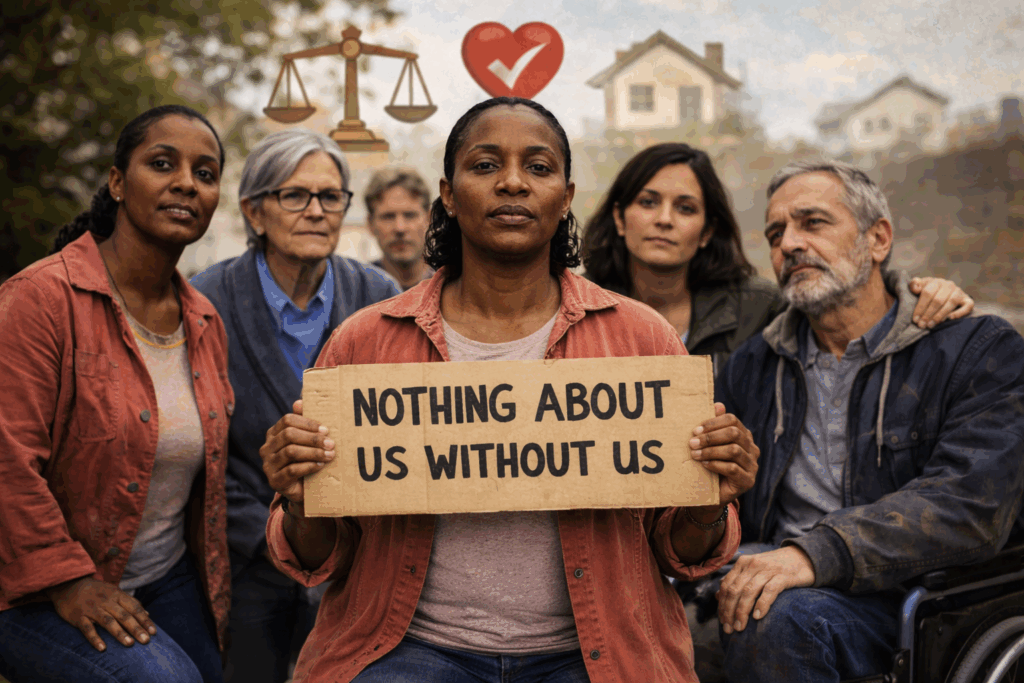

Extreme social exclusion and multiple disadvantage – people facing intersecting difficulties (poverty, migration, substance use, etc.)
Many of the people at the heart of SMES Europa’s work live at the intersection of multiple disadvantages: long-term poverty, experiences of migration and displacement, substance use, discrimination, unemployment, criminal justice involvement and family breakdown. These intersecting factors form a pattern of extreme social exclusion in which standard services often do not fit or are not accessible. Responding effectively requires a nuanced understanding of how these difficulties reinforce each other and a capacity to offer flexible, low-threshold support that can adapt to complex and changing life situations.